
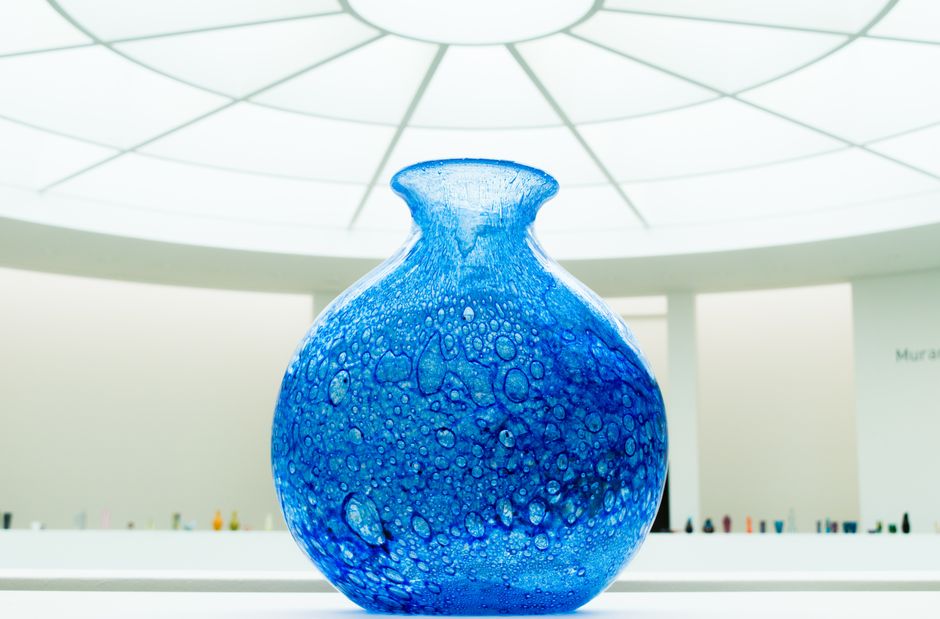
Antique Murano glass is prized by collectors, interior designers, and trade buyers for its luminous color, handcrafted detail, and connection to one of the oldest glassmaking traditions in Europe. Because older pieces usually lack a modern trademark sticker, authentication requires a closer look at the glass itself and the documents that accompany it. This guide explains what defines antique Murano glass, the techniques used in older work, and how to recognize authentic pieces in a market where reproductions are common.
What Makes Murano Glass “Antique”?
Murano glass originated on the island of Murano in the Venetian lagoon in Italy, where the art of glassmaking has been passed down through generations of local families. In common collecting language, the term “antique” is used for earlier works, while “vintage” usually refers to mid-20th-century pieces and “contemporary” describes current production. Antique examples are generally understood as pre-20th-century works, although many buyers use the term loosely to describe any older Murano glass with significant age. The market for vintage Murano glassware is active, with pieces sourced from reputable auction houses, dealers, and private collections. Placing a piece on this timeline is the first step in authentication.
Signature Techniques Used in Antique Pieces
Older Murano glass can often be identified by the techniques used to create it. These methods are closely guarded traditions of the Murano glassmaking families, and they appear across vases, bowls, lighting, and decorative objects. Recognizing a technique is not proof of origin by itself, but it helps narrow down when and how a piece was made.
Murrina Millefiori
Murrina millefiori is one of the most recognizable Murano techniques. Thin sections of colored glass canes are arranged into patterns and fused together, creating flower-like or geometric designs within the glass. Vases made with murrina millefiori are entirely handmade in the famous Murano glass factories by skilled artisans, which is why each example is considered a unique work. Antique pieces in this style are highly admired for their intricate detail.
Filigrana and Latticino
Filigrana refers to glass made with fine threads of white or colored glass that run through the body of the piece. Latticino, a related technique, creates a delicate lattice or network pattern inside the glass. Both methods require great skill and are common in antique Murano glassware. A careful look at the interior structure of the glass can reveal whether the pattern runs all the way through or sits only on the surface.
Sommerso
Sommerso describes a layering technique in which one layer of colored glass is submerged beneath another layer, usually clear or a contrasting color. The result is a piece with depth and richness that is difficult to reproduce in machine-made glass. For a fuller look at these techniques, see the Home Accessories technique glossary.

How to Spot Authentic Antique Murano Glass
Authenticating antique Murano glass combines physical inspection with documentary evidence. No single sign proves authenticity, but several features together can give strong confidence. The following points are the first things to examine.
Examine the Pontil Mark
Hand-blown glass is removed from the blowpipe with a pontil rod, and the base of the piece usually shows a pontil mark where the rod was attached. This mark is a sign of hand production. Machine-made reproductions typically lack this irregular scar and instead show a smooth, uniform base.
Look for Bubbles and Weight
Hand-blown Murano glass often contains tiny air bubbles that form naturally during the blowing process. These bubbles are small, scattered, and irregular. The weight of the piece also offers clues. Authentic work tends to have a balanced, substantial feel, while thin reproductions may feel disappointingly light.
Check for Signatures and Trademarks
One traditional way to verify Murano glass authenticity is by locating the certificate of origin sticker on the piece. However, antique pieces may no longer retain a sticker after decades of use or cleaning. In those cases, look for a signature engraved or painted on the base, although many older pieces are unmarked. Trade buyers can learn more about documentation in our guide to Murano glass certificates of authenticity.
Review Provenance Documentation
Vintage Murano glassware in the secondary market is often described as free of chips, cracks, and defects when it comes from reputable auction houses, dealers, and private collections. Provenance records, past sale history, and ownership documentation add real value because they connect the piece to a reliable source.
Common Signs of Reproductions or Mislabeled Glass
Reproductions of Murano glass are common, and some are sold with misleading labels. Several signs should raise caution. A perfectly uniform surface with no bubbles, seams, or slight asymmetries may indicate machine production. A base that is completely flat and polished without any pontil mark is also suspicious. Labels that are printed directly onto the glass rather than applied as a separate sticker should be questioned, since the traditional form of identification is the certificate of origin sticker. Price can be a clue as well. If a piece is offered at a fraction of the cost of comparable authenticated work, the item may be mislabeled. For investment-grade buying, it is safer to insist on certificates and provenance rather than rely on price alone.
Buying Antique Murano Glass Through a Trade Supplier
For antique stores, furniture and lighting retailers, art galleries, architects, and interior designers, sourcing Murano glass through a trade supplier is often more reliable than buying from unknown online sellers. Venetian Art Glass has imported and distributed authentic hand-blown Murano glass since 1992 and holds the “Vetro Artistico Murano” trademark for authenticity. The company serves trade professionals with mirrors, lighting, home accessories, and sculptures, and offers custom design services for project work.
When building a collection or curating pieces for a client, review the available options in Murano glass sculptures and Murano glass mirrors to see the range of hand-blown work. Trade buyers who need help verifying old pieces or selecting new ones can contact the team directly for guidance. Establishing a relationship with a vetted wholesale source is the surest way to keep a stock of authentic Murano glass.
Frequently Asked Questions
How can I tell if my Murano glass is antique?
Look at the base for a pontil mark, check for hand-blown characteristics like small irregular bubbles, and examine the surface for the signature techniques used in older Murano work. Provenance documentation from auction houses, dealers, or private collections adds confidence, as does a certificate of origin if one survives.
Does antique Murano glass have a trademark sticker?
Some antique pieces may carry a certificate of origin sticker, but many older items have lost it over time. The absence of a sticker alone does not mean the piece is fake. Look for engraved signatures, production traits, and documentation to support authenticity.
What is the difference between antique and vintage Murano glass?
Antique generally refers to pre-20th-century pieces, while vintage usually describes mid-20th-century work. Contemporary Murano glass is current production from the island. All three categories are collected, but antique and vintage pieces are often valued for their age, design history, and the techniques used.
Where do reputable vintage Murano glass pieces come from?
Reputable vintage Murano glassware comes from established sources such as auction houses, dealers, and private collections. These sources typically guarantee that pieces are free of chips, cracks, and defects, and they can often provide useful background on the piece and its history.