
The Man Behind the Light: Mariano Fortuny y Madrazo
Mariano Fortuny y Madrazo was born in Granada, Spain in 1871 but spent his life in Venice, Italy. Often described as a latter‑day Renaissance Man, Fortuny was an innovator and a thorough original. He was as well‑versed in physics and chemistry as he was in art and design. Although remembered primarily as a dress and fabric designer, Fortuny was also a painter, engraver, architect, photographer, set designer, lighting technician, inventor and impresario. As a painter, he was interested in the properties of light and its potential for drama. Some have called him the Leonardo da Vinci of the 20th century because his creations spanned so many disciplines. All of his work reflects the Wagnerian concept of a total work of art, where every element unites into a cohesive whole.
Fortuny’s fascination with light led him to experiment with theatrical illumination. In 1901 he patented an indirect theatrical lighting system, a breakthrough that allowed stage lighting to be softer and more atmospheric. This invention not only revolutionized theater but also inspired him to apply the same principles to domestic lighting. His lamp designs embody his design principles as well as his personal enthusiasms. For less utilitarian purposes, he conceptualized decorative mood lighting with Eastern‑influenced silhouettes for his living quarters at Palazzo Pesaro Orfei in Venice. These early experiments laid the foundation for what would become the iconic Fortuny lamp.
The Birth of a Lighting Icon
The original Fortuny lamps are based on the models designed by Mariano Fortuny thanks to his research in the field of theatrical lighting. His understanding of how light interacts with space and fabric allowed him to create fixtures that are both functional and sculptural. The lamps quickly gained a following among aristocrats and artists who valued the soft, diffused glow they produced. Today the collection includes chandeliers, pendant lights, flush mount ceiling lights, wall sconces, and floor lamps, each piece made with the same attention to detail that Fortuny himself demanded.
Sophistication, refined techniques, a high quality finish and attention to detail are the hallmarks of Fortuny lighting. Every lamp is still handcrafted in Venice, Italy, using traditional methods that have been passed down through generations.
Silk Lamps
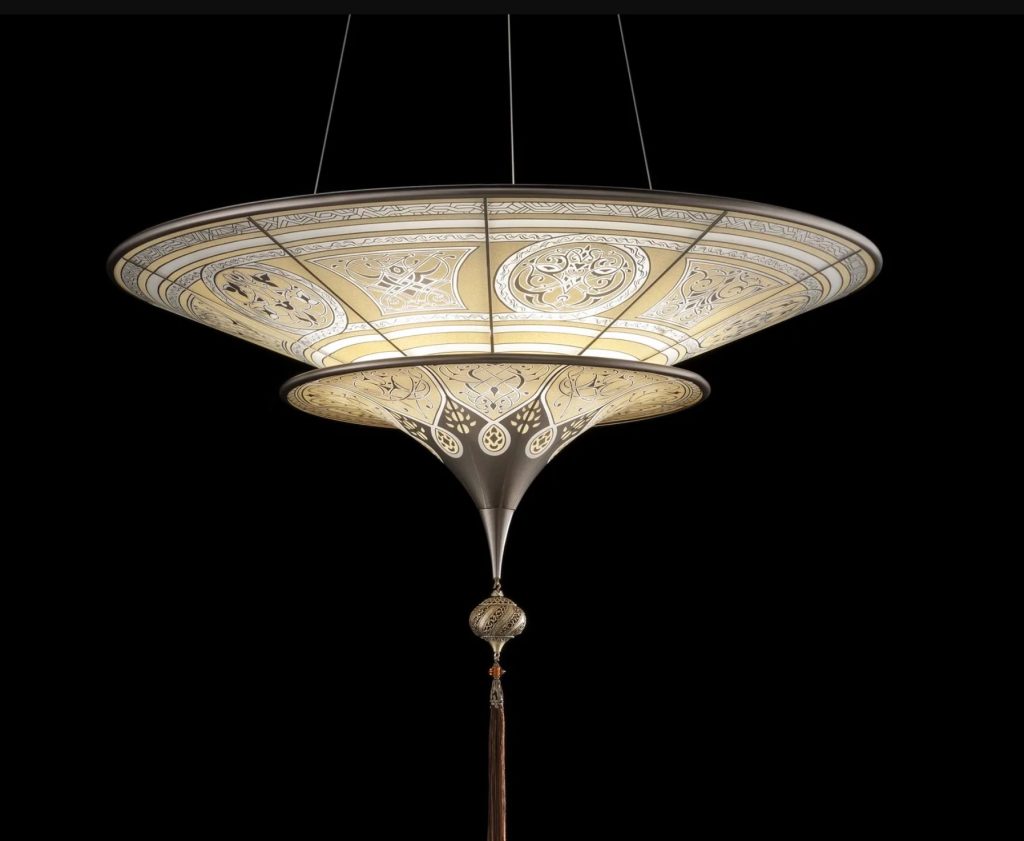
The light fixtures fashioned with luxurious silk have staying power and fit right into a wide range of traditional and contemporary interiors. Silk shades are often pleated or printed with geometric patterns, reflecting Fortuny’s background in textile design. The fabric softens the light, casting a warm, inviting glow that enhances any room. Silk Fortuny lamps are particularly popular in living rooms, bedrooms, and dining areas where a touch of elegance is desired.
Glass Lamps
Fortuny glass lamps include the Cesendello Cascade lamp, which showcases hand‑blown Murano glass. The glass is often gold‑flecked or colored, echoing the Venetian glassmaking tradition. These pieces make a bold statement and work well as focal points in entryways or over dining tables. The glass versions retain the same three‑legged structure and 360‑degree rotation, combining artistic beauty with functionality.
Fortuny Lighting in Modern Interiors
The timeless design of Fortuny lighting allows it to complement both classic and contemporary spaces. The clean lines of the metal structure and the ability to adjust the shade make these lamps versatile enough for minimalist lofts, eclectic apartments, or traditional residences. Designers appreciate the blend of historical craftsmanship and modern functionality. A silk Fortuny chandelier can serve as a focal point in a modern living room, while a floor lamp with its adjustable aluminum shade provides functional task lighting with an artistic touch. The Eastern‑inspired silhouettes bring an exotic warmth to neutral‑toned interiors, bridging the gap between old‑world charm and current trends.
Because the fixtures are handcrafted with high‑quality materials, they age gracefully and retain their value. Interior designers often specify Fortuny lamps for projects that demand a unique heritage piece. The 360‑degree rotation and tilt mechanism make them practical for highlighting artwork or architectural details. Whether used in a hotel lobby, a private residence, or a gallery, Fortuny design lighting adds a layer of sophistication that mass‑produced fixtures cannot match. The availability of both silk and glass options means the collection can adapt to a variety of design schemes, from opulent traditional to sleek contemporary.
Frequently Asked Questions
Are Fortuny lamps still made today?
Yes, Fortuny lamps are currently made in Venice, Italy. The production maintains the original designs and manufacturing techniques that Mariano Fortuny developed, ensuring each piece honors his legacy of craftsmanship and attention to detail.
What materials are used in Fortuny lamps?
Fortuny lamps are made with an aluminum screen and a steel structure. The shades are crafted from either high‑quality silk or hand‑blown Murano glass, depending on the model. The silk lamps often feature pleated or geometric designs, while glass versions showcase classic Venetian shapes.
Can Fortuny lamps be used in contemporary interiors?
Fortuny design lighting fits well in both traditional and contemporary interiors. The clean lines of the metal structure and the ability to rotate and tilt the shade make these lamps versatile enough for modern spaces while still carrying a historic aesthetic that adds depth to any room.